
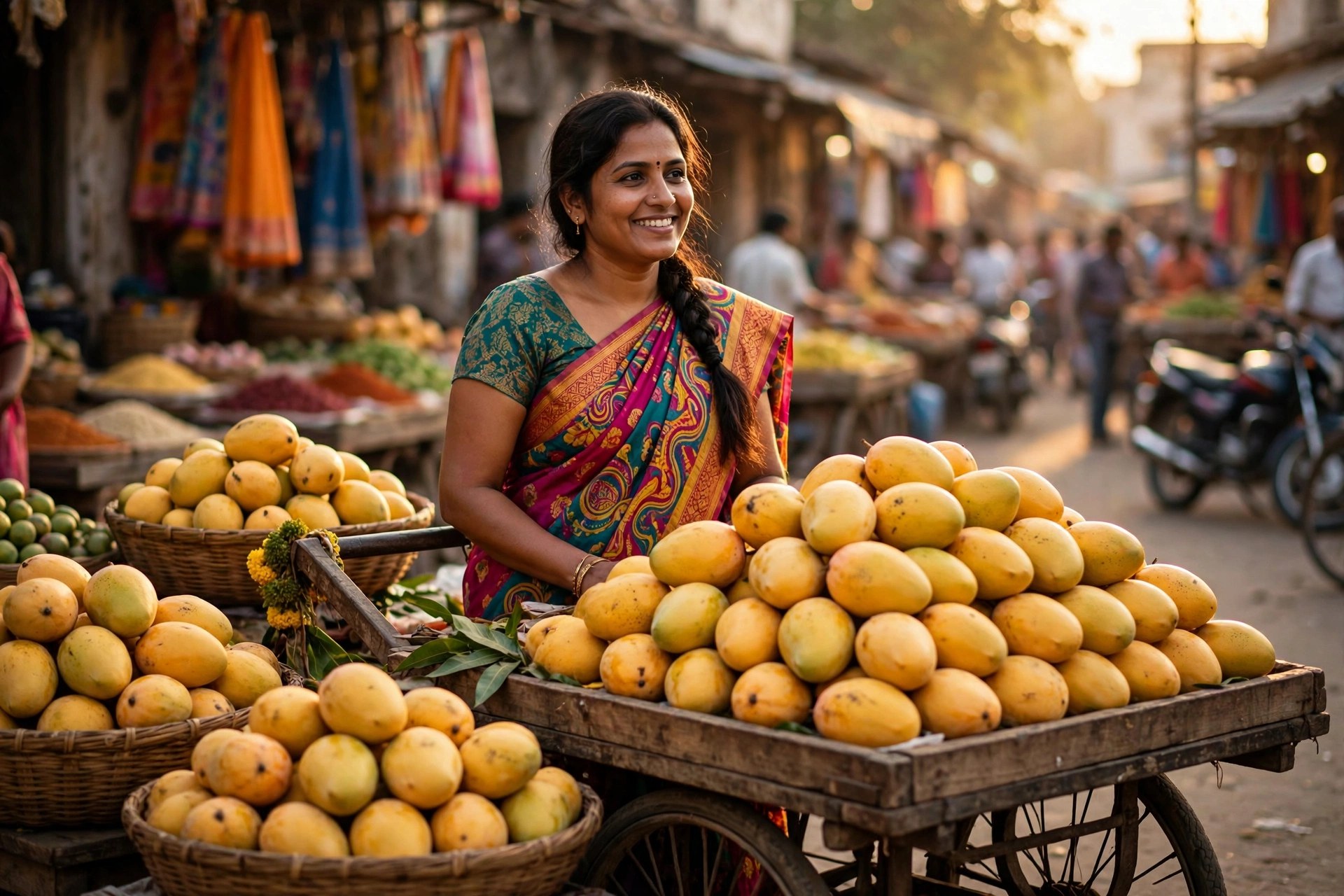
A mango vendor in Khandeshi Hindi just beat most Bollywood trailers.
The video is called “Choti Aam Wali.” It is a comedy skit about a vendor selling mangoes, performed in Khandeshi, a regional language most Indians outside Maharashtra have never heard spoken. It pulled 3.2 million views, running at 8.6 times its channel’s average. No studio. No marketing budget. No star.
Meanwhile, a “De Dana Dan” Bollywood comedy clip reel is doing 9.4 times its channel’s normal numbers. Old clips from a 2009 film are beating fresh content.
Something big is happening. The regional comedy creator economy is not a cute side note in India’s internet story anymore. It is one of the fastest-growing segments of it. And the money flowing through it deserves a closer look than it usually gets.
The pattern is not slowing down
If you think the mango vendor was a one-week wonder, check the radar again. This week our YouTube culture radar flagged another Khandeshi hit: “Jani Ka Bhoot Bangla,” a haunted house skit from the channel KHANDESH COMEDY VIDEO. It has pulled 2.8 million views and is running at 4.1 times its channel’s average. Different skit, same language, same story: the regional comedy creator economy at work.
Watch the skit here:
The catalogue story is even stranger. A Bindas Comedy video uploaded in 2020 is back on the charts with 5 million views, running at 3.2 times its channel’s average. A Bindas fun team video from 2021 is doing the same trick: 4.4 million views at 3.8 times the channel norm. These are not new releases. They are old videos earning fresh money years after anyone paid to make them.
That is the part of the regional comedy creator economy the hype pieces miss. A hit is not a moment. It is an asset that keeps paying.
What the regional comedy creator economy actually is
Strip away the jargon. The regional comedy creator economy is the business of making people laugh in languages Bollywood ignores, distributed on phones, paid through platforms that did not exist fifteen years ago.
The creators are often people building online businesses for the first time. A Bhojpuri sketch troupe in Patna. A Haryanvi comedy channel run out of a village. A Khandeshi duo filming mango vendor bits with a phone and natural light. Their production budgets round to zero. They publish on YouTube, Instagram Reels, and WhatsApp.
Their audiences are huge and focused. Hundreds of millions of Indians consume content primarily in regional languages. For years, mainstream entertainment treated them as an afterthought. The regional comedy creator economy grew in that gap, and it is still growing.
How the money works
YouTube is still the main cash register. Here is the cash trail of the regional comedy creator economy.
Ad revenue. Once a channel joins the YouTube Partner Program, Google places ads on its videos and shares the revenue. Indian ad rates per thousand views are often lower than American ones, which means a regional comedy channel needs serious volume to make real money. The good news: comedy travels well on shares, and 3.2 million views is serious volume.
Memberships and tips. Channels can sell monthly memberships, Super Chats during live streams, and Super Thanks on videos. Comedy channels with loyal regional audiences win paying supporters at rates that surprise people who write off this audience.
Brand deals. This is where the regional comedy creator economy gets fun. A national brand selling soap in rural Maharashtra gets more for its money from a Khandeshi comedy channel. It beats buying a TV slot nobody watches. Regional creators charge less than mainstream influencers and reach viewers who are hard to find any other way. Local shops, regional brands, and even political campaigns are buying in.
Live shows and merchandise. The top regional comedy acts tour. Ticket sales, meet-and-greets, and t-shirts turn online fame into offline cash. Profits are better than most people think because costs are so low.
The middlemen arrive. Multi-channel networks sign regional creators, take a cut, and help with production, brand deals, and legal issues. Some creators love this. Some see it as a tax on their freedom. Either way, it shows the regional comedy creator economy is old enough to have middlemen.
What the views actually pay: the maths
Views are vanity until you convert them. So let us convert them, and see what the regional comedy creator economy actually pays.
Creators do not earn per view. They earn an RPM, the revenue per thousand views that actually lands in their account after YouTube takes its cut. For comedy aimed at Indian audiences, creators commonly report an RPM somewhere between ₹40 and ₹120 per thousand views [CITATION NEEDED]. Videos watched heavily from abroad sit at the top of that range or above it, because advertisers pay more for those viewers.
Now run the numbers on this week’s radar:
- Jani Ka Bhoot Bangla, 2.8 million views. That is 2,800 blocks of a thousand views. At ₹40 per block, the video pays about ₹1.1 lakh. At ₹120 per block, it pays about ₹3.4 lakh. One haunted house skit, shot with a phone, pays out real money.
- Choti Aam Wali, 3.2 million views. The same maths gives roughly ₹1.3 lakh to ₹3.8 lakh from ads alone.
- The 2020 Bindas Comedy video, 5 million views. Lifetime ad money of roughly ₹2 lakh to ₹6 lakh, and it is still going. If a resurging catalogue video adds even 200,000 views in a good month, that is ₹8,000 to ₹24,000 in that month, for work finished five years ago.
Brand deals follow a similar pattern. A regional channel with a few lakh subscribers can charge ₹25,000 to ₹1.5 lakh for one brand integration [CITATION NEEDED]. One soap mention inside a skit can pay more than a million ad views. That is why the smartest creators treat ad revenue as the floor, not the prize.
This is the quiet engine of the regional comedy creator economy. Tiny costs, real rupees, and a back catalogue that keeps working while the creator sleeps.
Who is actually getting rich
Not everyone. The honest answer matters more than the hype, so here it is.
The top one percent of creators do very well. Channels with millions of subscribers and steady output can build real businesses with teams, editors, and several income streams.
The middle tier earns a living. Tens of thousands of monthly views plus a brand deal or two can beat a local salary in many Indian cities. This is the real story of the regional comedy creator economy: not luxury cars, but a decent living.
The long tail earns almost nothing. Most channels never earn enough to get paid. The algorithm is brutal, and funny does not always mean profitable.
The platforms always get paid. YouTube takes its cut of every ad dollar before the creator sees a rupee. This is the least surprising sentence in this article.
The brands may be the biggest winners of all. Regional influencer marketing is still cheap for its reach. Smart advertisers are using that gap right now, while the regional comedy creator economy is still cheap to join.
The NRI lens: why you should care
You are reading IndiaPay, so let us make this about your money.
First, the regional comedy creator economy is a window into where India’s buyer attention is actually going. If you invest in Indian equities or follow the consumer story, this is primary research wearing a funny hat. The audiences these creators command are the same households buying the products in your portfolio.
Second, the diaspora is part of the audience. Regional comedy travels on WhatsApp to New Jersey and Toronto as easily as it travels to Nashik. Views from abroad earn higher ad rates, which makes NRI viewers worth far more to these creators. Your watch time sends a little money into the regional comedy creator economy.
Third, there is a lesson about cost structures. A Khandeshi duo with a phone is competing for attention with studios spending crores. Cheap, genuine content is beating costly, polished content. That dynamic is not limited to comedy.
For more on how viral Indian content intersects with money, see our breakdown of the viral riddle that teaches real money math. And if you enjoy the overlap of Indian comedy and financial psychology, the two-rupee coin that bought an iPhone is worth your time.
The risks nobody mentions
Every gold rush has fine print.
Platform dependence. A creator can lose all income overnight from an algorithm change or a policy strike. There is no safety net when YouTube decides.
Burnout. Comedy at volume is brutal. The channels that win are the ones posting constantly, and constant output in a creative field breaks people.
Payment friction. Indian creators deal with tax cut at source on payouts, GST on brand deals, and the paperwork of running a small business in India. The money is real. So is the paperwork.
Copycats and content theft. Viral regional formats get cloned instantly. No one stops them. Original creators often watch copycats cash in on their ideas.
The practical takeaway
The regional comedy creator economy is real, growing, and cheap as an advertising market. A mango vendor skit in Khandeshi pulling 3.2 million views is not a fluke. It is what happens when hundreds of millions of ignored viewers finally get shows in their language, made by people who sound like them.
If you are an investor, watch where regional attention flows. It leads buyer spending by a year or two.
If you are just a fan, know that your views genuinely matter to these creators. The economics run on volume, and every share is a small vote for more of it.
And if anyone tells you the internet made geography irrelevant, show them a Khandeshi mango vendor outdrawing Bollywood. Place still matters. Language still matters. Funny always matters.
Sources
For official guidance on how YouTube creator monetization works:
- YouTube Partner Program overview — eligibility and revenue sharing basics
—
Disclaimer: This article is for informational purposes only and does not constitute financial, investment, tax, or legal advice. View counts cited are from the IndiaPay YouTube culture radar dated 2026-10-12 and 2026-10-15, and change over time.
Keep reading
Guddu’s Dad Is Getting Married Again. We Priced the Wedding.
Guddu’s father is getting married, and the whole internet has opinions about the bill. The latest episode of Jagriti Pahwa’s…
UPI Fraud Exposed: 5 Scams Hiding Behind a Funny Money Story
If you have watched any Hindi comedy film about money going missing, you know the drill. Someone counts cash, someone…
Stolen Money Puzzle: The Viral Riddle That Teaches Real Money Math
1. The 18‑second viral clip that broke everyone’s brain In early October 2026, an 18 second YouTube Short titled “Can…